


As you approach the remarkable moment of welcoming your new baby through surrogacy, this guide is designed to foster a supportive partnership between intended parents and gestational carriers.
Recognizing the journey of surrogacy as one marked by profound trust, respect and connection, we highlight the importance of collaboration in preparing for the hospital stay. This guide aims to ensure that both the gestational carrier feels cherished and the baby receives a loving welcome into the world.
Preparing for the Hospital Stay

There’s an intimacy to the final weeks before birth. Conversations become more specific. Schedules tighten. Nerves and excitement mingle. And somewhere in the middle of it all, two sides that began as strangers now move in sync.
Most gestational carriers and intended parents begin talking about the hospital bag around 32–34 weeks. This is when practical details meet the emotional reality of what’s coming. What does the carrier need to feel cared for? What makes her comfortable? What does the baby need for those first moments? What does the hospital provide — and what does it not?
The planning isn’t just about items. It’s about shaping the environment in which this birth will unfold, honoring the carrier’s experience while preparing a warm welcome for the baby.
The Hospital Bag: Thoughtful Essentials That Make a Difference
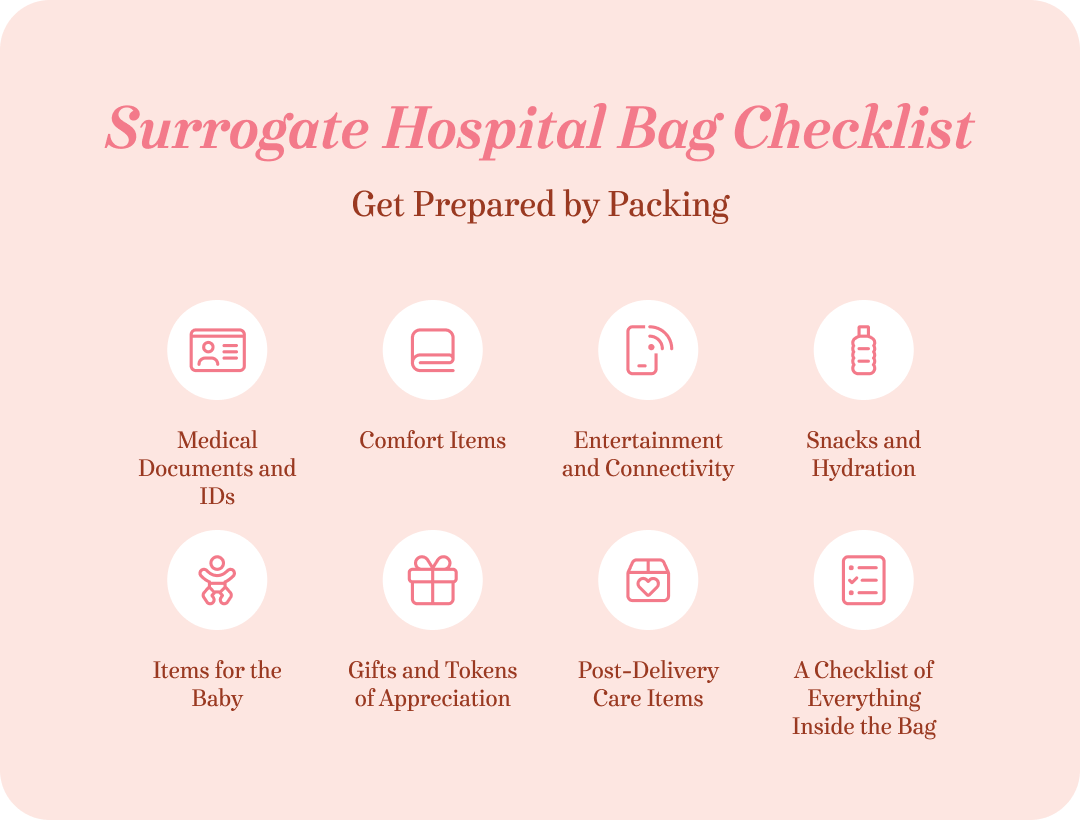
There’s no single “perfect” hospital bag. Each one reflects the preferences, routines and personalities of the people involved. But there are essentials that tend to matter, as well as small comforts that make the experience softer and more grounded.
For the Gestational Carrier
Medical Documents and Identification
Surrogacy births often involve additional paperwork, so having documents neatly organized removes stress on an already emotional day. Helpful items include:
- Photo ID
- Insurance card
- Any surrogacy-related hospital documents
- A printed birth plan
- Emergency contacts
Comfort Items That Feel Like Home
Labor and recovery can be long. Even small comforts help the space feel personal.
- A soft robe or loose gown
- Cozy socks and slippers
- Comfortable clothes for heading home
- Toiletries that feel familiar (face wash, moisturizer, chapstick)
- Hair ties and a long phone charger
- A favorite blanket or pillow, if allowed
Entertainment for the Quiet Moments
Labor comes with stretches of stillness. Consider bringing entertainment like:
- Playlists
- Downloaded movies or shows
- Meditation or relaxation apps
- A book or journal
Snacks and Hydration
Keeping energy steady matters during labor. Plan to pack:
- High-protein snacks
- Crackers, granola bars, dried fruit
- A reusable water bottle
- Other beverages (confirm with hospital policies)
Gentle Post-Delivery Care
Hospitals provide basics, but personal items can make recovery more comfortable:
- Postpartum underwear or pads
- Comfortable after-birth clothing
- Soothing lotions or balms
For Intended Parents
For the Baby’s First Hours
This is the part most intended parents love preparing — the tiny outfits and soft blankets that symbolize long-awaited arrival. Plan to pack:
- Onesies, footed pajamas and a going-home outfit
- Diapers and wipes (some hospitals provide them, some don’t)
- A swaddle blanket or two
- Socks, hat, mittens
- Infant car seat installed and ready to go
For Your Own Stay
Depending on the hospital’s policies, intended parents may have their own room or spend extended time onsite. Make sure to bring:
- A change of clothes
- Toiletries
- Medications
- Snacks and water
- Chargers and devices
- A camera, if you prefer something beyond a phone
Something Meaningful for the Carrier
While optional, many intended parents enjoy bringing a small, thoughtful gift for the surrogate to show gratitude for her incredible commitment. This could include:
- A handwritten note
- A cozy throw blanket
- A self-care kit
- A small keepsake
A thoughtful, well-supported birth experience begins long before you arrive at the hospital.
If you’re exploring surrogacy and want guidance that supports both the gestational carrier and the intended parents, contact Joy of Life to learn how our team walks with you through every milestone.
Preparing Beyond the Bag: Planning the Experience Together
Preparing for delivery during a surrogacy journey involves more than packing the right items. The smoothest experiences often come from talking through the logistics that shape the flow of the day. These conversations help everyone arrive at the hospital with confidence, clarity and shared expectations.
Here are some key planning areas to go over together well before the due date:
1. Delivery Room Expectations
Discuss who will be present during labor and delivery, how involved the intended parents hope to be and what the gestational carrier is comfortable with. Consider:
- Who is allowed in the room during labor
- Who will be present for the actual birth
- Hospital rules around support people
2. Bonding and First Moments With the Baby
These are small but meaningful decisions that help set the tone for the birth experience.
- Who cuts the cord
- Whether intended parents participate in skin-to-skin
- Quiet time vs. time for photos
- How soon the intended parents want to feed or hold the baby
3. Wristbands, Access and Hospital Room Arrangements
Surrogacy often comes with unique logistical needs.
- How wristbands will be assigned
- Which rooms intended parents will have access to
- Whether they can stay overnight
- NICU policies, if applicable
4. Parentage and Release Procedures
Although attorneys oversee the legal framework, it’s helpful to understand the hospital’s practical steps.
- Required paperwork before discharge
- When parentage documents are signed
- Who signs what and when
5. Communication With Medical Staff
Agree on how decisions are communicated during labor, especially if unexpected situations arise.
- How the surrogate prefers updates
- When intended parents are looped in
- How to handle changes in the birth plan
6. Arrival, Timing and Logistics
These details may feel small, but they reduce stress during a high-emotion moment.
- Who the surrogate should contact when labor begins
- Best entrances and parking areas
- What to bring inside vs. leave in the car
- Backup plans if labor progresses quickly
7. Plans for After Delivery
Once the baby arrives, both sides often settle into different rhythms. Clarifying expectations helps keep the transition gentle.
- Whether the intended parents will stay at the hospital
- How long the surrogate expects to rest afterward
- Plans for photos, introductions or visits
- Baby’s pediatrician information
- Going-home timing and transportation
Ready to Embark on Your Parenting Journey with Joy of Life?

Surrogacy is a relationship built on trust, gratitude and shared purpose. Packing the hospital bag may seem practical, but it symbolizes something deeper: two sides preparing, together, for one extraordinary moment.
If you feel ready to begin that journey — or you’re curious what it could look like — we invite you to become a parent with Joy of Life. Our team is here to support your family with compassion, clarity and care from the very first step.