

Becoming a surrogate mother is one of the most generous and life-affirming gifts you can give — the chance for someone to experience the joy of parenthood. If you’re considering this incredible journey, especially here in California, you may have questions about the process, legal protections, compensation and where to start.
At Joy of Life®, we’re here to walk beside you with compassion, clarity and unwavering support. This guide will help you understand how to become a surrogate mother in California and what you can expect along the way emotionally, medically and legally.
Why California Is a Leading State for Surrogacy
California is often seen as one of the best states for surrogacy because the legal process is well established and the protections are clear.
Some of the biggest advantages include:
- Strong legal recognition of surrogacy agreements
- Pre-birth parentage orders that help establish intended parents’ rights before birth
- A strong track record of supporting LGBTQ+ couples, single parents and international intended parents
- A more supportive process with clear legal protections and access to experienced medical and legal professionals
California also allows both traditional and gestational surrogacy, though gestational surrogacy is much more common. Because the surrogate does not have a genetic connection to the baby in a gestational surrogacy, it’s usually the more straightforward legal path.
For many women, that legal clarity makes the process feel more straightforward and better supported from the start.
California Surrogate Requirements at a Glance
Before applying, it’s important to know if you qualify. Most agencies in California, including Joy of Life®, require the following:
- Be a U.S. citizen or permanent resident (excluding Louisiana and Nebraska)
- Be between 21-38 years old
- Have a healthy BMI under 30
- Have had at least one full-term pregnancy
- No more than 2 C-sections or 5 total deliveries
- Live a drug-free, healthy lifestyle
- Provide OB/GYN records
Meeting these requirements doesn’t guarantee approval, but it does give you a strong starting point.
How to Get Started as a Surrogate in California
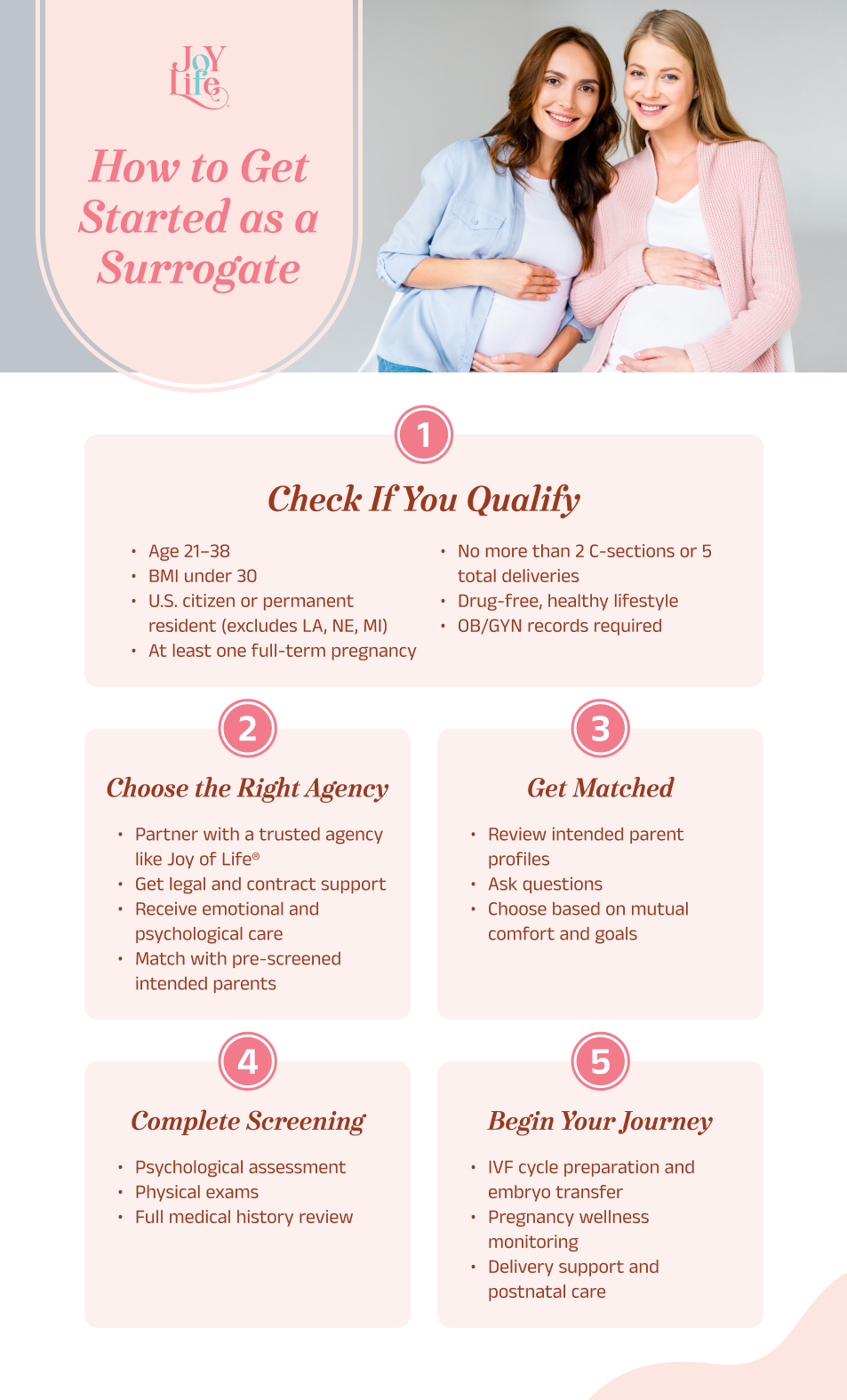
If you meet the basic requirements, the next step is understanding how the process works. Here’s what becoming a surrogate in California typically looks like.
1. Choose a Trusted Surrogacy Agency
The agency you choose shapes your experience from the beginning. Working with an established agency like Joy of Life® gives you support with screening, matching, legal coordination and communication throughout your journey.
A strong agency should help you:
- Understand each stage of the process
- Review expectations before you commit
- Get legal and contract support
- Receive emotional and psychological guidance
- Move through the process with a clear point of contact
2. Get Matched With Intended Parents
Once you’re approved to move forward, the matching process begins. This is where you’ll review intended parent profiles, ask questions and find a match that feels comfortable for everyone involved.
At Joy of Life®, the goal is to make the right match based on communication style, shared expectations and overall comfort.
3. Complete Screening and Medical Evaluations
Before pregnancy begins, you’ll complete a more detailed screening process to make sure you’re physically and emotionally ready.
This usually includes:
- Psychological screening
- Physical exams
- Medical history review
- Fertility clinic evaluations
- Final legal and medical clearances
4. Begin the Surrogacy Journey
After surrogacy contracts are complete, you’ll begin the in vitro fertilization (IVF) cycle process and prepare for embryo transfer.
From there, your experience may include:
- IVF cycle preparation and embryo transfer
- Pregnancy monitoring
- Ongoing support from your care team
- Delivery planning
- Postnatal support
See if You Qualify to Become a Surrogate in California
Interested in how to become a surrogate mother in California, but not sure where to begin? Let Joy of Life® be your guide. Our team is here to answer your questions, help you understand the requirements and walk you through every step with clarity and compassion.
Apply to become a surrogate today.
How Much Do Surrogates Get Paid in California?
Compensation is one of the most common questions prospective surrogates have, and for good reason. Surrogacy requires time, commitment and flexibility. Your compensation should reflect that.
At Joy of Life, surrogate compensation in California typically includes:
- Base compensation starting at $60,000 for first-time surrogates
- Higher compensation for experienced surrogates
- Monthly stipends
- Medication, IVF and delivery bonuses
- Maternity clothing allowance
- Travel reimbursement
- Bed rest and recovery pay
Many surrogates also receive additional support such as counseling, insurance coordination and access to experienced clinical care.
Compensation can vary based on your experience, location, medical history and the details of your match. If you want to find out what you could earn, take our quiz!
How Surrogacy Fits Into Your Family Life
Choosing to become a surrogate doesn’t just affect you. It also affects the people closest to you, especially if you’re married or raising children.
If You’re Married
Surrogacy should be a shared decision. Your spouse will typically be involved in the screening process and will need to understand the emotional, legal and logistical side of the process.
If You Have Children
Many surrogates are already mothers, and that’s part of what makes them strong candidates. If you have children, it’s important to think through how you’ll talk about surrogacy in a way they can understand. In most cases, simple, age-appropriate conversations go a long way.
Why Choose Joy of Life® for Your Surrogacy Journey?
Choosing the right agency matters. At Joy of Life, we support our surrogates with clear guidance, experienced care and personal attention throughout the process.
Surrogates who work with us have access to:
- Competitive compensation
- Legal, medical and psychological support
- Matching with pre-screened intended parents
- Dedicated coordinators
- Ongoing communication and care throughout the experience
The goal is to make sure you feel informed, supported and respected from the moment you apply.
Frequently Asked Questions
Is surrogacy legal in California?
Yes. California is one of the most surrogacy-friendly states in the country, with well-established laws that support both surrogates and intended parents.
Does California allow paid surrogacy?
Yes. Compensated surrogacy is legal in California. Compensation terms are outlined in the surrogacy agreement so expectations are clear before the process begins.
Are surrogacy contracts enforceable in California?
Yes. California requires surrogacy agreements to meet specific legal standards, including notarized contracts and independent legal counsel for all parties.
Do intended parents get legal parentage before the baby is born?
In many California surrogacies, yes. Pre-birth orders help establish the intended parents as the baby’s legal parents before birth, which helps avoid a separate adoption process afterward.
How much do surrogates get paid in California?
Compensation varies, but first-time surrogates may start at $60,000 in base compensation, with additional bonuses, stipends and reimbursements.
Do I have to live in California to work with a California surrogacy agency?
No. You don’t have to live in California to work with a California agency, but your home state can affect some parts of the legal process. That’s why it’s important to work with an agency and attorney team that understands cross-state surrogacy.
Ready to Become a Surrogate Mother in California?
If you’ve been thinking about becoming a surrogate, there’s no better place to start than right here. California offers unmatched legal protections, generous compensation and a deeply supportive community, and Joy of Life® is here to guide you through every step.
Take the first step toward a life-changing journey by applying to become a surrogate mother in California today.